UK Student Visa Application: 5 Tips to Avoid NSF Emails
Navigating the UK student visa Application can feel like trying to solve a puzzle in the dark. You’re bombarded with jargon like CAS (your university’s ‘Confirmation of Acceptance’), SLA (the ‘Service Level Agreement’ for processing times), and NSF (the dreaded ‘Not Straightforward’ email), and the stakes couldn’t be higher. A single misstep can lead to delays, added costs, or a refusal that jeopardizes your entire academic future. It’s a journey where it’s easy to feel like a passive participant, simply waiting for a decision you can’t control.
This guide is designed to cut through that noise. It offers five non-obvious, strategic truths based on hard-won experience. These aren’t the standard tips you’ll find on a checklist. They are counter-intuitive insights that empower you to move from a passive applicant to a proactive strategist, taking control of your application and significantly increasing your chances of success.
1. The Strategic Withdrawal: Protecting Your UK Student Visa Application

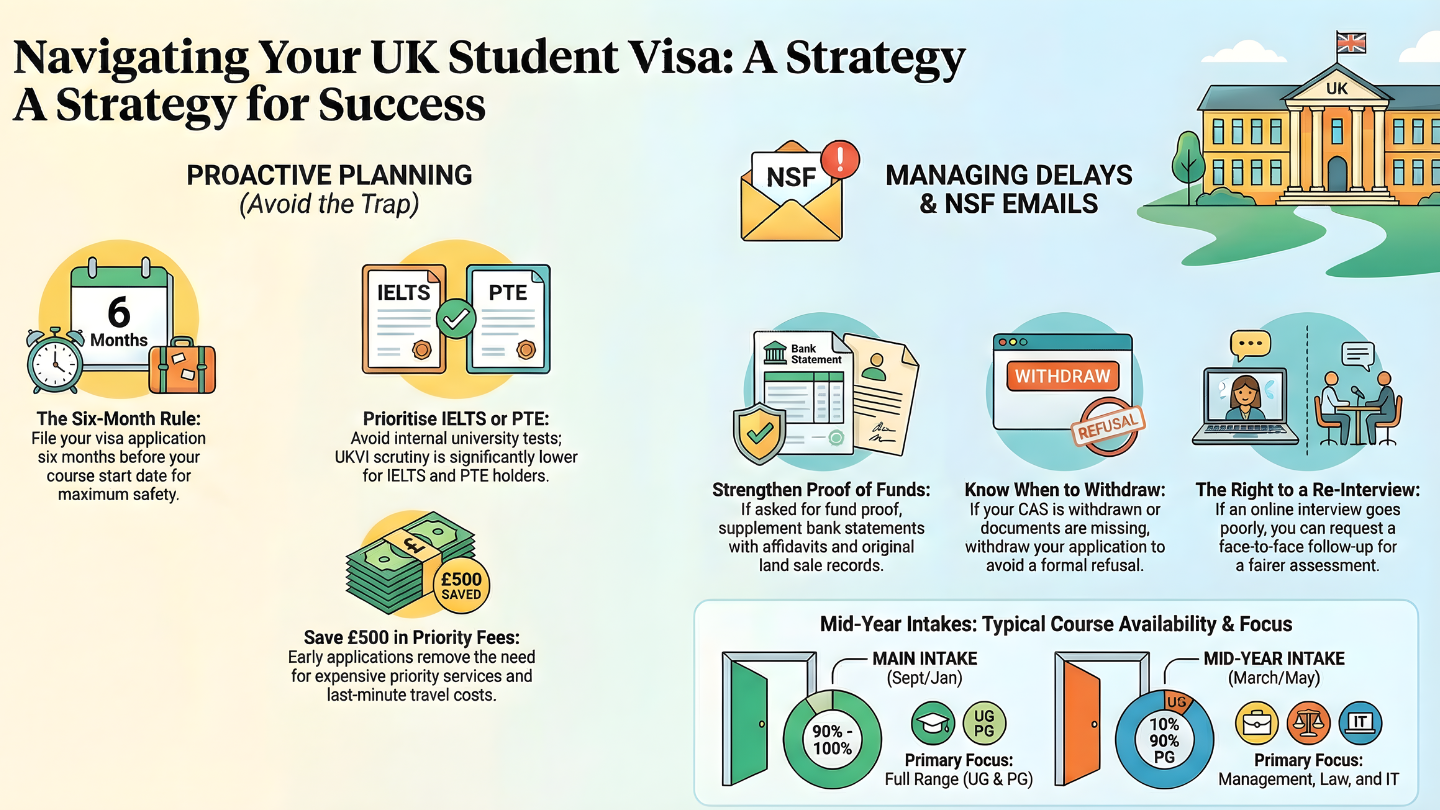
If you receive a “Not Straightforward Form” (NSF) email from UKVI requesting proof of funds and you know your documentation is weak, the most strategic course of action is often to withdraw your application. This isn’t an admission of defeat; it’s a calculated decision to protect your long-term immigration history. This isn’t always about fake documents; often, genuine students simply don’t have meticulous records of past transactions.
From a strategic standpoint, a visa refusal is far more damaging to your record than a withdrawal. A refusal must be declared on all future applications, signaling a red flag to visa officers and making subsequent approvals much more difficult. A withdrawal, however, costs you the application fee but leaves your record clean. It allows you to regroup, prepare stronger documentation, and reapply for the next intake without the black mark of a rejection.
“It is much better to withdraw before a rejection. There is no major loss in a withdrawal… but if you get rejected, it will be much more difficult for you in the future.”
2. The Interview Do-Over: You Have the Right to Demand a Fair Assessment
Many students are unaware of their rights during the visa interview process. If you have an online interview and feel you performed poorly—whether due to technical glitches, confusing questions, or sheer nervousness—you do not have to passively accept the outcome.
At the end of the interview, the officer will ask if you are satisfied. This is your moment to take control. If you believe you didn’t get a fair chance, you have the right to state that you are not satisfied and formally request a new, face-to-face interview. Remember, you are a genuine student making a significant financial investment in UK education. You are not an uneducated person seeking a work permit; you are a valuable future asset, and the UK needs you. You are entitled to a clear, professional, and fair evaluation.
“You have the right to appeal. You can tell them, ‘No, I am not satisfied with this interview. I would like to come for a face-to-face interview.’ You should go to this extent.”
3. The Master’s Degree Trap: Your Course Choice Could Trigger a Rejection
A common mistake for students with technical backgrounds—like electrical engineering, computer science, or civil engineering—is choosing a generic master’s degree like “Business Management.” While widely available, this choice is a major red flag for visa officers, who are trained to spot illogical educational pathways.
The unwritten rule here is that your progression must make sense. Why would an engineer suddenly pivot to general business? This becomes a critical problem because interviews are becoming much more common. You can no longer hide behind paperwork; you must be prepared to verbally defend your choices. A vague link makes you a less credible applicant. Instead, choose a related management course that builds on your existing expertise, such as “Engineering Management.” This creates a logical, defensible career path that will stand up to scrutiny.
4. The English Test Hierarchy: Not All Approved Tests Are Equal
While UK universities might accept a wide array of English language tests for admission—including Duolingo, TOEFL iBT, Oxford Language, Medium of Instruction (MOI) letters, or their own internal tests—the UK Visas and Immigration (UKVI) authority does not view them all equally.
From a tactical perspective, opting for tests other than the most established ones puts your application under a microscope. Applicants with these alternative tests often face tighter scrutiny, stricter compliance checks, and a less smooth correspondence process with the visa office, adding unnecessary risk and potential delays. To ensure the smoothest possible journey and minimize compliance headaches, the safest and most recommended options are IELTS and PTE.
5. The “Too Early” Advantage: How Applying Early Protects Your Future
The common tendency is to wait until the last minute, but UK immigration rules allow you to apply for your student visa up to six months before your course starts. Taking advantage of this is one of the smartest strategic moves you can make.
Applying early helps you avoid the immense stress of last-minute priority visa fees (£500) and expensive flights. It also helps you avoid a system that becomes overloaded and prone to error during peak season, when agency teams are worn out, and glitches appear. Most importantly, it shields you from sudden, negative policy changes. For instance, a recent rule change directly impacts students right now: those who applied early for the September intake will have a two-year Post-Study Work (PSW) visa. However, for those going in the January 2026 intake, if they apply after December 31st, their PSW will be only 18 months. Applying early locks in the rules in effect at that time, protecting your future.
——————————————————————————–
Conclusion: From Applicant to Strategist
These five truths share a common thread: the UK visa system has pressure points and unwritten rules. By understanding them—knowing when to withdraw, how to challenge an unfair interview, or how to shield yourself from policy changes—you shift from a passive applicant to a strategist who is in control of their own destiny. Successfully securing your visa isn’t just about paperwork; it’s about being informed, proactive, and tactical.
Now that you know these insider strategies, what is the one proactive step you will take today to take control of your UK visa journey?