For international students weighing where to enroll in 2027, Florida Atlantic University, NJIT, DePaul and Long Island University now outperform many Ivy League schools on the metrics that matter most: R1 research access, STEM OPT eligibility for 36 months of work authorization, and up to $35,000 in merit scholarships.
For years, the shorthand for “great university” was simple: name recognition. But for international students weighing a 2027 enrollment, the calculus has shifted. Prestige alone doesn’t get you a job, a visa, or a return on a six-figure investment — research access, corporate proximity, and real financial aid do.
Making sense of that shift on your own is hard, which is exactly why a growing number of students are turning to specialists like Emerging Visions to map out the right-fit university before they apply.
A look at 2026/2027 data shows several non-Ivy institutions quietly outperforming bigger names on the metrics that actually shape a career. Here’s why.
1. Research Access You Can Actually Use
The Carnegie Classification’s “R1” tier marks the highest level of research activity in U.S. higher education — but a newer, more useful label for prospective students is the “R1 + Opportunity University.”
Florida Atlantic University (FAU) is one of just 21 institutions nationwide to hold this dual status: R1 research intensity paired with genuine undergraduate access. FAU backs this with roughly $75 million in annual research spending, 30+ specialized labs, and more than 6,000 undergraduate research opportunities each year — meaning students help produce knowledge instead of just absorbing it from a syllabus.
New Jersey Institute of Technology (NJIT) takes a similar approach from the polytechnic side, running 140+ applied research labs where students work on industry-relevant problems from year one.
2. Your Real Classroom Is the City
Location shapes a professional network more than almost anything else a university offers. DePaul University and Long Island University (LIU) have built their entire value proposition around this.
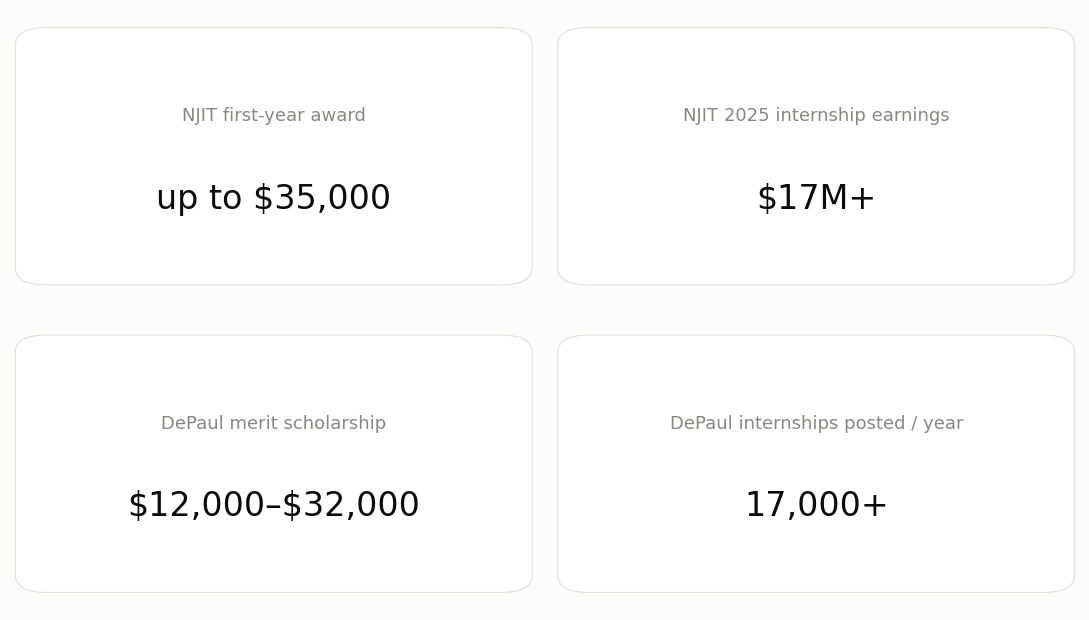
DePaul — ranked #67 on U.S. News & World Report’s 2027 “Best Value Schools” list — sits in downtown Chicago, within reach of more than 380 Fortune 500 company locations. Its Career Center posts over 17,000 internships a year, giving students a direct line into one of the country’s largest business hubs.
On the East Coast, LIU’s Brooklyn and Post campuses put students close to more than 50 Fortune 500 headquarters, including firms like Google, Morgan Stanley, and Mastercard. For students at these schools, “campus” isn’t confined to a quad — it extends into the boardrooms of some of the world’s biggest employers.
3. Creative Degrees, STEM-Level Payoff
Some of the most technically rigorous programs in 2027 aren’t in engineering buildings — they’re in animation studios and game design labs. DePaul ranks #12 nationally for Animation and #18 for graduate Game Design, and both carry official STEM designations.
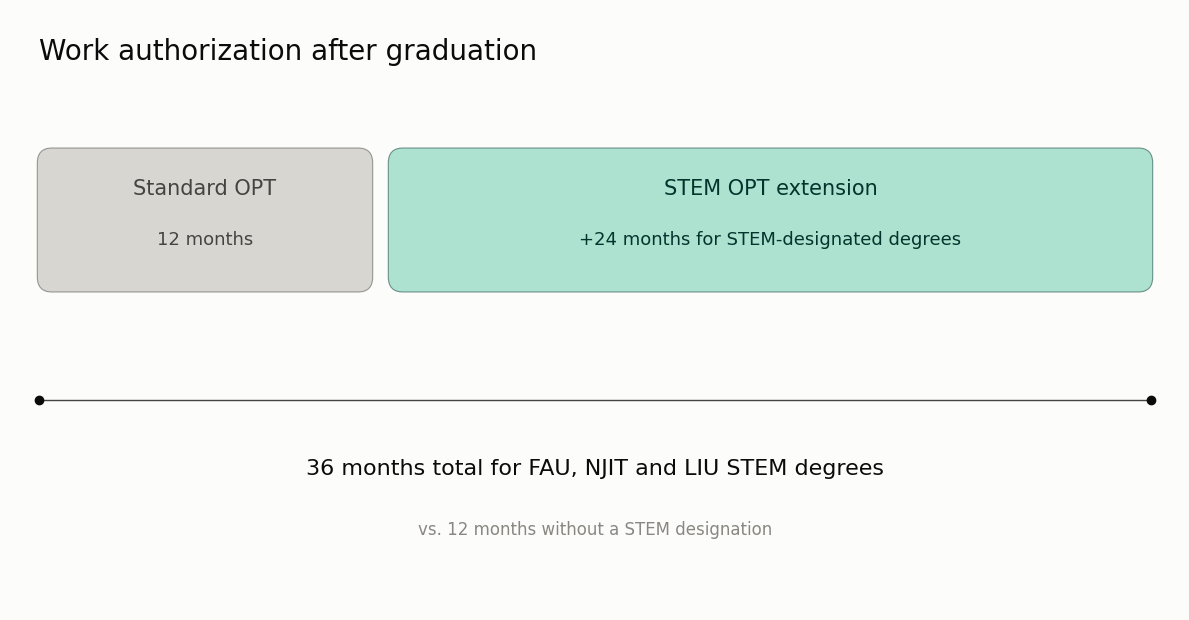
That label matters enormously for international students: a STEM designation unlocks the 24-month STEM OPT extension, stretching total U.S. work authorization to 36 months — three times the standard 12-month OPT period.
Partner schools have leaned hard into this advantage:
- NJIT — 40+ STEM-designated master’s degrees
- FAU and LIU — 30+ STEM-designated degrees each, spanning tech, business, and creative fields
These programs are backed by recognized accreditors — AACSB for business, ABET for engineering — so the credential travels well globally.
4. The Real ROI: Scholarships and Six-Figure Internship Earnings
Sticker-price tuition rarely tells the real story. Merit aid and internship income shift the math considerably.
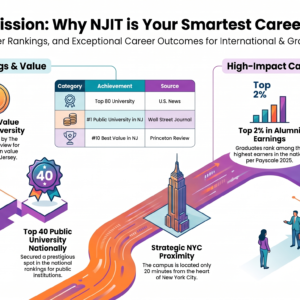
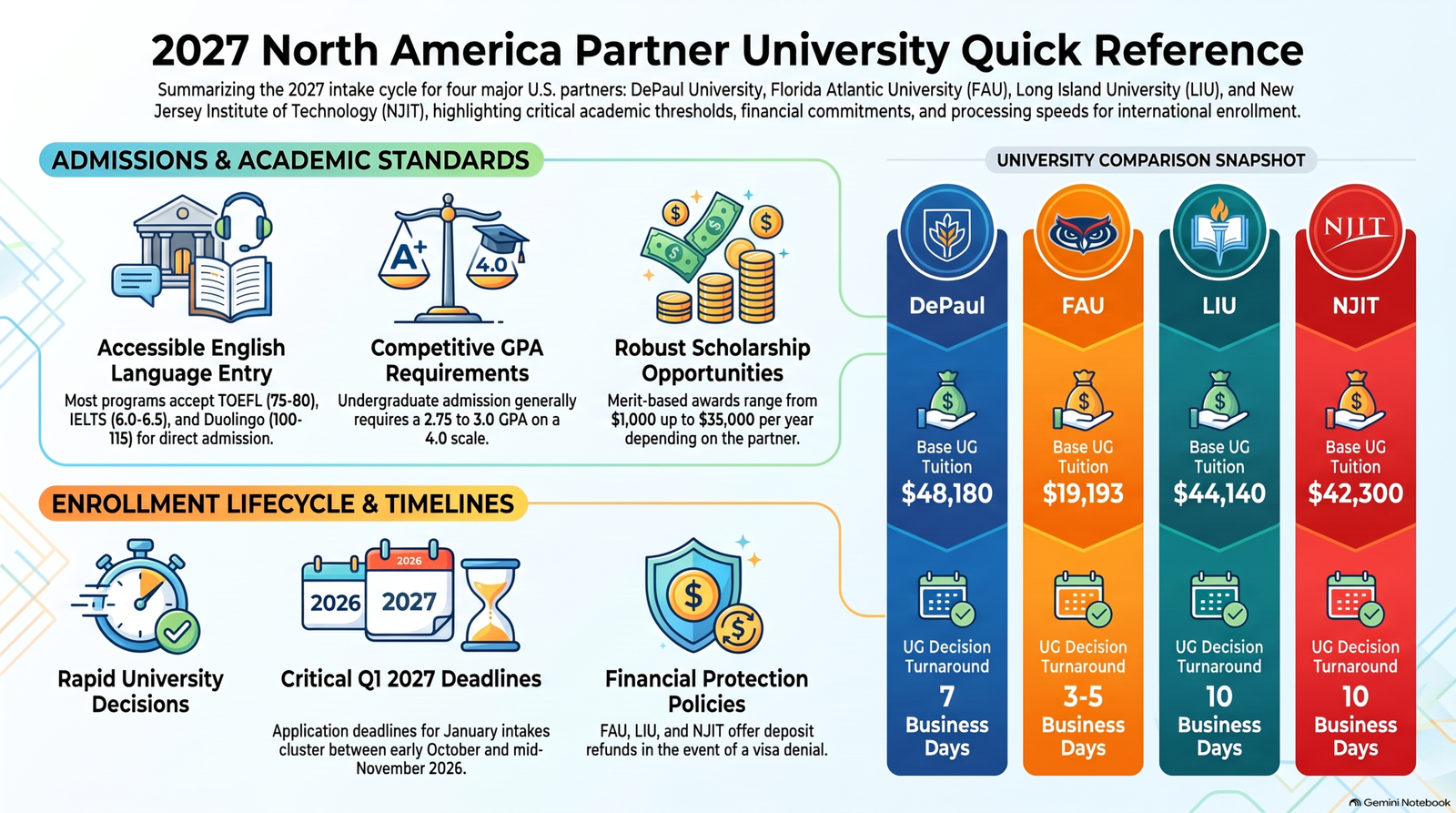
- NJIT offers first-year awards up to $35,000, with even non-Honors students averaging $16,100. In 2025 alone, NJIT students earned a combined $17 million+ across 2,000+ internships and 541 co-ops at companies including Apple and Goldman Sachs.
- DePaul offers renewable merit scholarships starting between $12,000–$32,000, with follow-on awards of $15,000–$31,000 in later years.
- LIU provides comparable renewable awards for up to three years.
Top-tier scholarships are competitive — FAU’s President’s International Scholarship, for instance, typically requires a 3.5 GPA — but these are real dollars, often exceeding what “brand-name” schools offer international applicants, who frequently receive no aid at all.
Figuring out which scholarship you’re actually eligible for, and how to build an application strong enough to win it, is where Emerging Visions does most of its work with students.
5. Speed Matters: Fast Decisions, Faster Visas
The biggest hidden cost of studying in the U.S. is time — specifically, the wait for an admission decision and the I-20 that makes a visa interview possible.
- FAU turns around admission decisions in 3–5 business days, with I-20s issued in the same window.
- NJIT and LIU typically decide within 10 business days, issuing I-20s in 5 days or less.
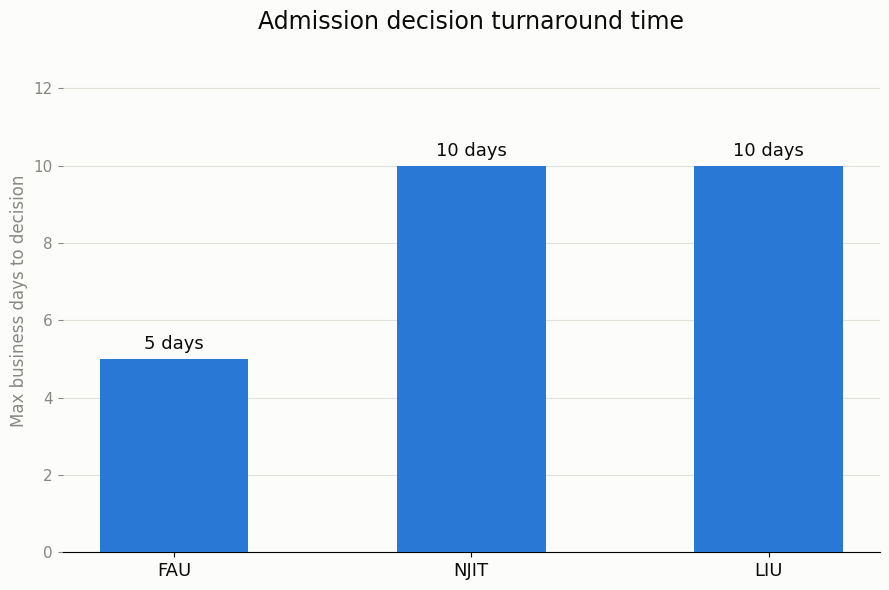
That speed lets students book visa interviews months earlier than peers at slower-moving institutions — a real advantage in a competitive global admissions cycle.
The Bottom Line
The 2027 picture rewards a different formula: location + research access + real financial aid, not just name recognition. Before applying anywhere, check the accreditations (ABET, AACSB) and look at what recent graduates actually earned during their programs. That data tells you more than any ranking list.
If you’re an international student trying to work out which of these universities — or which of the hundreds of others out there — is the right fit for your goals, budget, and visa timeline, Emerging Visions has built its practice around exactly this kind of decision. Their team guides students through shortlisting, scholarship strategy, and visa-ready applications from start to finish. You can start that conversation at www.emergingvisions.co.uk.
FAQ
Q: Which universities offer the best value for international students in 2027?
A: Florida Atlantic University (FAU), New Jersey Institute of Technology (NJIT), DePaul University, and Long Island University (LIU) lead on research access, corporate proximity, STEM-designated degrees, and scholarship funding — outperforming several Ivy League schools on return on investment.
Q: What is the STEM OPT extension and why does it matter?
A: The STEM OPT extension adds 24 months of U.S. work authorization on top of the standard 12-month Optional Practical Training period, giving graduates of STEM-designated degrees a total of 36 months to work in the U.S. — three times longer than non-STEM graduates.
Q: How much scholarship money can international students get at these schools?
A: NJIT offers first-year awards up to $35,000, with non-Honors students averaging $16,100. DePaul offers renewable merit scholarships of $12,000–$32,000, with follow-on awards of $15,000–$31,000 in later years. LIU offers comparable renewable awards for up to three years.
Q: How fast do these universities process admission decisions and visa documents (I-20s)?
A: FAU turns around admission decisions and I-20 issuance in just 3–5 business days. NJIT and LIU typically decide within 10 business days, with I-20s following in 5 days or less.
Q: Which of these universities are considered R1 research institutions?
A: FAU holds R1 Carnegie Classification status alongside strong undergraduate research access — one of only 21 U.S. institutions with that combination. NJIT operates as a top-tier polytechnic research university with 140+ applied research labs.