The Future is “For the People”: 5 Surprising Reasons New Zealand’s Rising Research Powerhouse is Redefining Higher Education

The Future is “For the People”: 5 Surprising Reasons New Zealand’s Rising Research Powerhouse is Redefining Higher Education

  1. Beyond the Traditional Ivory Tower – In the collective imagination, the university is often depicted as a slow-moving “ivory tower”—a cloistered environment more interested in preserving the past than navigating the volatile shifts of the 21st century. However, a global recalibration is underway, led by a new breed of “future-making” institutions that reject this inertia. At the forefront is the University of Waikato. Established in 1964, this institution has bypassed the rigid traditionalism of its older peers by anchoring its identity in Ko te tangata (“For the People”).

Waikato represents a high-performance trajectory, having rapidly ascended to become one of New Zealand’s top three universities. But the real curiosity lies in its methodology: what happens when a research powerhouse prioritizes indigenous wisdom as a primary driver of high-tech innovation? The result is an educational ecosystem designed for an era where “business as usual” no longer exists.

  1. The “Punching Above Its Weight” Research Rank – While many institutions rely on historical prestige, Waikato’s reputation is built on modern intellectual rigor. The university is a rising star in global metrics, placing 235th in the 2025 QS World University Rankings and maintaining its status in the top 300 for 2026. Most significantly, it stands as the #1 university in New Zealand for research (citations per faculty member).

This “research-intensive” pedagogy ensures that students are not merely passive consumers of legacy data. Instead, they are mentored by global experts who are actively expanding the boundaries of their fields. In a world of fragmented information, being taught by the architects of new knowledge provides a distinct competitive advantage.

“The University of Waikato is driving innovation for societal progress and global sustainability, linking knowledge with industry for a better world.”

  1. From Halloween Cobwebs to Asteroid Mining: Unconventional Inquiry – Waikato’s research portfolio is defined by interdisciplinary fluidity and a willingness to explore niche “arenas of future-making” that carry profound implications for the 2030s workforce.
  • Low-Cost Biodiversity Monitoring: Researchers discovered that polyester “Halloween cobwebs” are extraordinarily effective at collecting environmental DNA. This project is a masterclass in “low-cost, high-impact agility”—teaching students to find innovative solutions using unconventional materials in resource-constrained environments.
  • Navigating Legal Gray Zones in Space: As the race to mine asteroids intensifies, Waikato legal experts are drafting the ethical and regulatory frameworks for space-based resource extraction, preparing for a future that will fundamentally reshape global supply chains.
  • Commercial Tech in the Iran War: Analyzing how commercial satellite technology has reshaped the Iran war, Waikato researchers are identifying the “gray zones” where private-sector involvement outpaces international law.

These projects do more than generate headlines; they instill the mental models required for a “decoupled global workforce.” Graduates are trained to navigate fragmented and less predictable operating environments, where the ability to synthesize molecular biology with space law or commercial ethics is no longer a niche skill, but a prerequisite for leadership.

  1. The Pā: Architecture as an Indigenous Manifesto – The Hamilton campus is anchored by “The Pā,” a landmark facility that functions as a sophisticated student hub, marae, and “Te Āhurutanga” (a dedicated student sanctuary). More than just an award-winning building, The Pā is a physical manifestation of the university’s strategic commitment: Kia haere whakamua.

This philosophy—walking toward the future while acknowledging the past—is a strategic tool for managing modern volatility. By integrating Māori worldviews into the academic fabric, the university treats cultural richness as a resource for critical thinking rather than an aesthetic checkbox. In an era of AI-driven volatility and shifting global alliances, the ability to “look back to move forward” allows graduates to ground technological progress in human-centric, ethical values.

“Kia haere whakamua, me hoki whakamuri.” (Walking towards our future, while acknowledging our past.)

  1. Leading the Sustainability Barometer – At Waikato, sustainability is viewed through an “asset-based lens,” positioning it as a core survival metric and a competitive advantage for graduates. The university doesn’t just teach environmental policy; it trains students to be “strategy officers” capable of solving complex social and governance challenges.
  • Global Recognition: Ranked 116th globally in the QS Sustainability Rankings 2026 (Top 6% worldwide).
  • SDG Impact: Ranked in the Top 100 of the THE Impact Rankings for five key goals, including Gender Equality (SDG 5), Decent Work and Economic Growth (SDG 8), Life Below Water (SDG 14), Life on Land (SDG 15), and Peace, Justice, and Strong Institutions (SDG 16).

This commitment ensures that Waikato graduates are prepared for a global economy where ethical governance and social impact are the new benchmarks for institutional success.

  1. The “Triple Crown” and the $15,000 Incentive – The university’s practical value is epitomized by the Waikato Management School, which holds the rare “Triple Crown” accreditation (AACSB, AMBA, and EQUIS), placing it in the top 1% of business schools globally. To facilitate access for high-caliber international talent, the university provides a robust merit-based scholarship framework.
Scholarship TierMaximum ValueSelection Basis
Undergraduate$15,000 NZD (Tuition Credit)Academic Merit (B+ GPA equivalent)
Postgraduate (Taught)$10,000 NZD (Tuition Credit)Academic Merit (B+ GPA equivalent)
NZ-based School LeaversUp to $15,000 NZDCompletion of Year 13 in NZ
  1. Conclusion: Engineering a Career with Purpose The data suggests a fundamental shift in the ROI of higher education: 95% of Waikato graduates are employed or in further study shortly after graduation. This outcome is not accidental; it is the result of an institutional strategy that prizes research impact, indigenous-led innovation, and sustainability as the pillars of modern career readiness.

As we enter an era defined by AI and a recalibrated global workforce, the most critical decision for any student is the choice of environment. Are you choosing a university that merely preserves the past, or one that is actively “future-making”?


UK Visa Policy 2026

UK Student Visa 2026: A Comprehensive Guide to Avoiding NSF Emails, Delays, and Refusals


UK Visa Policy 2026
A Comprehensive Guide to Avoiding NSF Emails, Delays, and Refusals


UK Student Visa Application: 5 Tips to Avoid NSF Emails

 
Navigating the UK student visa Application can feel like trying to solve a puzzle in the dark. You’re bombarded with jargon like CAS (your university’s ‘Confirmation of Acceptance’), SLA (the ‘Service Level Agreement’ for processing times), and NSF (the dreaded ‘Not Straightforward’ email), and the stakes couldn’t be higher. A single misstep can lead to delays, added costs, or a refusal that jeopardizes your entire academic future. It’s a journey where it’s easy to feel like a passive participant, simply waiting for a decision you can’t control.
 
This guide is designed to cut through that noise. It offers five non-obvious, strategic truths based on hard-won experience. These aren’t the standard tips you’ll find on a checklist. They are counter-intuitive insights that empower you to move from a passive applicant to a proactive strategist, taking control of your application and significantly increasing your chances of success.
 
1. The Strategic Withdrawal: Protecting Your UK Student Visa Application
Successful UK student visa application tips
If you receive a “Not Straightforward Form” (NSF) email from UKVI requesting proof of funds and you know your documentation is weak, the most strategic course of action is often to withdraw your application. This isn’t an admission of defeat; it’s a calculated decision to protect your long-term immigration history. This isn’t always about fake documents; often, genuine students simply don’t have meticulous records of past transactions.
 
From a strategic standpoint, a visa refusal is far more damaging to your record than a withdrawal. A refusal must be declared on all future applications, signaling a red flag to visa officers and making subsequent approvals much more difficult. A withdrawal, however, costs you the application fee but leaves your record clean. It allows you to regroup, prepare stronger documentation, and reapply for the next intake without the black mark of a rejection.
 
“It is much better to withdraw before a rejection. There is no major loss in a withdrawal… but if you get rejected, it will be much more difficult for you in the future.”
 
2. The Interview Do-Over: You Have the Right to Demand a Fair Assessment
 
Many students are unaware of their rights during the visa interview process. If you have an online interview and feel you performed poorly—whether due to technical glitches, confusing questions, or sheer nervousness—you do not have to passively accept the outcome.
 
At the end of the interview, the officer will ask if you are satisfied. This is your moment to take control. If you believe you didn’t get a fair chance, you have the right to state that you are not satisfied and formally request a new, face-to-face interview. Remember, you are a genuine student making a significant financial investment in UK education. You are not an uneducated person seeking a work permit; you are a valuable future asset, and the UK needs you. You are entitled to a clear, professional, and fair evaluation.
 
“You have the right to appeal. You can tell them, ‘No, I am not satisfied with this interview. I would like to come for a face-to-face interview.’ You should go to this extent.”
 
3. The Master’s Degree Trap: Your Course Choice Could Trigger a Rejection
 
A common mistake for students with technical backgrounds—like electrical engineering, computer science, or civil engineering—is choosing a generic master’s degree like “Business Management.” While widely available, this choice is a major red flag for visa officers, who are trained to spot illogical educational pathways.
 
The unwritten rule here is that your progression must make sense. Why would an engineer suddenly pivot to general business? This becomes a critical problem because interviews are becoming much more common. You can no longer hide behind paperwork; you must be prepared to verbally defend your choices. A vague link makes you a less credible applicant. Instead, choose a related management course that builds on your existing expertise, such as “Engineering Management.” This creates a logical, defensible career path that will stand up to scrutiny.
 
4. The English Test Hierarchy: Not All Approved Tests Are Equal
 
While UK universities might accept a wide array of English language tests for admission—including Duolingo, TOEFL iBT, Oxford Language, Medium of Instruction (MOI) letters, or their own internal tests—the UK Visas and Immigration (UKVI) authority does not view them all equally.
 
From a tactical perspective, opting for tests other than the most established ones puts your application under a microscope. Applicants with these alternative tests often face tighter scrutiny, stricter compliance checks, and a less smooth correspondence process with the visa office, adding unnecessary risk and potential delays. To ensure the smoothest possible journey and minimize compliance headaches, the safest and most recommended options are IELTS and PTE.
 
5. The “Too Early” Advantage: How Applying Early Protects Your Future
 
The common tendency is to wait until the last minute, but UK immigration rules allow you to apply for your student visa up to six months before your course starts. Taking advantage of this is one of the smartest strategic moves you can make.
 
Applying early helps you avoid the immense stress of last-minute priority visa fees (£500) and expensive flights. It also helps you avoid a system that becomes overloaded and prone to error during peak season, when agency teams are worn out, and glitches appear. Most importantly, it shields you from sudden, negative policy changes. For instance, a recent rule change directly impacts students right now: those who applied early for the September intake will have a two-year Post-Study Work (PSW) visa. However, for those going in the January 2026 intake, if they apply after December 31st, their PSW will be only 18 months. Applying early locks in the rules in effect at that time, protecting your future.
——————————————————————————–
Conclusion: From Applicant to Strategist
 
These five truths share a common thread: the UK visa system has pressure points and unwritten rules. By understanding them—knowing when to withdraw, how to challenge an unfair interview, or how to shield yourself from policy changes—you shift from a passive applicant to a strategist who is in control of their own destiny. Successfully securing your visa isn’t just about paperwork; it’s about being informed, proactive, and tactical.
 
Now that you know these insider strategies, what is the one proactive step you will take today to take control of your UK visa journey?

Navigating the New UKVI Landscape: A Practical Guide for Pakistani Students and Education Agents

The United Kingdom has long been a premier destination for international students, offering world-class education and strong post-study prospects. However, recent and upcoming changes to UK Visas and Immigration (UKVI) policy are transforming the compliance landscape. For students from developing countries such as Pakistan, and for the education consultants who support them, understanding these policy shifts is no longer optional – It is essential.

This guide breaks down the core UKVI reforms, explains how they specifically affect Pakistani applicants, and outlines a strategic response for students and education agents operating in this new environment.

Part 1: Understanding the Core UKVI Policy Changes

The UK government’s 2024–2025 immigration strategy focuses on reducing net migration and improving the integrity of the UK education sector. The policy direction places significantly more compliance responsibility on educational institutions than ever before.

1. The 2025 Sponsor Licence Rules

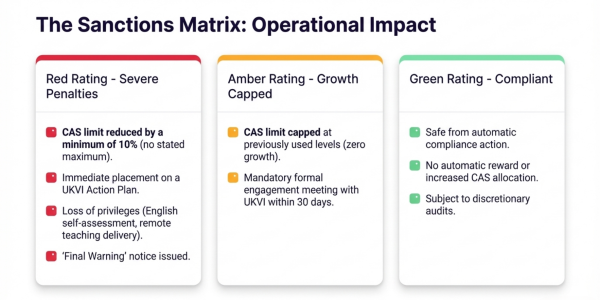
From September 2025, universities and colleges must meet strict new thresholds to retain their licence to sponsor international students. Key performance indicators include:

• A high course completion rate
• A low visa refusal rate

Institutions that fall short may lose their sponsorship licence. The result is increased caution in admissions decisions, especially for applications from higher-risk regions or from non-standard academic backgrounds.

2. Restrictions on Dependent Visas

New rules now prevent most international students on taught postgraduate programmes (e.g., Master’s degrees) from bringing dependents. This significantly affects Pakistani applicants, many of whom prefer to study abroad with their spouse or children.

3. Tighter Financial Documentation Requirements

Financial evidence is under far greater scrutiny. UKVI caseworkers are rejecting applications for issues such as:

• Sudden, unexplained large deposits
• Inconsistencies between declared income and bank statements
• Documents that appear edited, altered, or unverifiable

4. Greater Focus on the Genuine Student Test (GST)

The GST has become more rigorous. Applicants must demonstrate a logical, credible academic and career narrative. Weak academic progression, vague intentions, or a misaligned study plan may trigger concerns about genuine intent.

Part 2: Why These Changes Disproportionately Affect Pakistani Applicants

Although these rules apply globally, Pakistani applicants face unique and amplified challenges.

1. Complex Financial Histories

Students often rely on family businesses, agricultural income, or multiple sponsors. While legitimate, these sources can be difficult to document in the precise format UKVI requires. The required maintenance funds (£13,761 for London and £10,539 outside London) further increase documentation pressure.

2. Slow or Inconsistent Document Verification

UKVI and universities now cross-verify transcripts, degrees and English test results more frequently. Delays or inconsistencies from issuing institutions in Pakistan can jeopardise applications.

3. The Dependent Visa Ban

Many Pakistani families prefer studying abroad together. With dependents no longer permitted for taught Master’s students, some applicants are shifting interest toward Canada or Australia, which currently offer more flexible dependent policies.

4. Rising Institutional Risk Aversion

Universities must protect their visa refusal rates and completion rates to retain their licence. As a result, institutions may be more selective with applicants from regions where refusal rates have historically been higher, or where documentation is more complex.

Part 3: A Strategic Roadmap for Success

Given this new reality, both students and education consultants must adapt with diligence, transparency and strategic planning.

For Education Agents & Consultants (e.g., Emerging Visions)

1. Become Specialists in Compliance

Move beyond basic application processing. Your team must be trained in:

• UKVI financial evidence rules
• GST requirements
• Document verification processes
• Risk-based admissions behaviors of UK universities

2. Rigorously Pre-Vet Applications

Adopt an internal screening checklist that mirrors university and UKVI concerns.

Review:

• Academic progression
• Financial history
• Source of funds
• Study intention and career logic

Rejecting incomplete or high-risk profiles protects your credibility with university partners.

3. Develop Transparent University Partnerships

Demonstrate your due-diligence processes to partner universities. Provide complete, compliant, well-structured application packs that reduce their internal review time and strengthen trust.

4. Manage Student Expectations Honestly

Be upfront about:

• The dependent visa ban
• The importance of financial stability
• Realistic timelines
• The need for transparent documentation

This prevents last-minute surprises and ensures your clients are genuinely prepared.

For Pakistani Students

1. Start Early and Plan Strategically

Begin the process 12–18 months in advance. This helps you create a clean financial history, book language tests, and prepare credible documentation.

2. Maintain a Transparent Financial Trail

• Keep funds in the account for at least 6 months
• Avoid last-minute large deposits
• Document all income clearly
• If funds come from land sales or business revenue, provide supporting evidence plus an explanatory cover letter

3. Build a Coherent Academic Narrative

Your SOP must clearly connect:

• Past studies
• Work experience
• Course selection
• Future career goals

Any gaps or inconsistencies weaken your credibility.

4. Choose Institutions and Consultants Wisely

Select:

• Universities with stable sponsorship licences
• Consultants with UKVI knowledge and ethical practices

Avoid agents who promise guaranteed visas or encourage manipulated documents.

Conclusion: Compliance Is the New Currency

The UK’s immigration reforms are reshaping the international education landscape. For Pakistani applicants, the path remains open—but it now demands meticulous preparation, transparent financial documentation, and a credible academic rationale.
For students, authenticity and preparation are crucial.

For education agents, this new environment is an opportunity to strengthen professional standards, enhance compliance expertise, and build deeper trust with universities.

In the new UKVI landscape, shortcuts carry higher risks. Integrity, preparation, and transparency are the key determinants of success.

Disclaimer – This article reflects UKVI policies announced as of early 2024. Immigration regulations evolve frequently. For the most current information, always consult the official UK government website (GOV.UK) and seek advice from licensed immigration professionals.